

Medical Device Regulatory Affairs: A Practical Guide to US, EU, UK, and Indian Market Access
Introduction:
Bringing a medical device to the global market requires navigating distinct regional regulatory frameworks while anchoring every submission in rigorous preclinical safety and biocompatibility data. Whether preparing a Premarket Notification 510(k) for the United States, compiling technical documentation under the European Union Medical Device Regulation (EU MDR), meeting post-transition UK requirements, or securing manufacturing and import licenses under India’s Medical Devices Rules (MDR 2017), preclinical safety testing is the universal foundation.This guide outlines the core regulatory pathways across the US, EU, UK, and India, detailing how preclinical toxicology, chemical characterization, and Good Laboratory Practice (GLP) standards streamline multi-market authorization
- Multi-Market Regulatory Framework: Side-by-Side Comparison
Parameter | United States | European Union | United Kingdom (Great Britain) | India | |
Regulatory Authority | US FDA (CDRH) | European Commission / Notified Bodies | MHRA | CDSCO | |
Governing Legislation | FD&C Act (21 CFR Parts 800–898) | EU MDR 2017/745 | UK Medical Devices Regulations 2002 (as amended) | Medical Devices Rules (MDR), 2017 | |
Risk Classification | Class I, Class II, Class III | Class I, Class IIa, Class IIb, Class III | Class I, Class IIa, Class IIb, Class III | Class A, Class B, Class C, Class D | |
Primary Route to Market | 510(k), De Novo, or PMA | CE Marking via Notified Body Conformity Assessment | UKCA Marking via UK Approved Body | Form MD-5/9 (Manufacturing) or MD-15 (Import) | |
Core Non-Clinical Mandate | 21 CFR Part 58 (GLP), FDA ISO 10993-1 Guidance | ISO 10993 Series, ISO 14971, MDCG Biological Guidance | Designated Standards (ISO 10993 Series) | Fourth Schedule (MDR 2017), OECD GLP Safety Data |
. United States: Navigating US FDA Pathways (CDRH)
The United States Food and Drug Administration (FDA) regulates medical devices through the Centre for Devices and Radiological Health (CDRH). The appropriate submission route depends on device classification and risk profile:
- 510(k) Premarket Notification: Applies to most Class II devices and select Class I devices. The sponsor must demonstrate that the candidate device is substantially equivalent (SE) to a legally marketed predicate device in intended use, technological design, material formulation, and biocompatibility profile.
- Premarket Approval (PMA): The most stringent regulatory pathway, reserved for high-risk, life-supporting, or life-sustaining Class III devices. PMAs require valid scientific evidence, including exhaustive laboratory, preclinical animal safety, and clinical trial datasets.
- De Novo Classification: Provides a regulatory pathway for novel low-to-moderate risk devices that lack an identified, legally marketed predicate device.
Non-Clinical Safety Expectations
The FDA enforces its guidance document, Use of International Standard ISO 10993-1, “Biological evaluation of medical devices – Part 1: Evaluation and testing within a risk management process.” CDRH places strong emphasis on chemical characterization (ISO 10993-18) and toxicological risk assessment (ISO 10993-17) before initiating animal studies. All pivotal safety and biocompatibility studies submitted to the FDA must comply with 21 CFR Part 58 (Good Laboratory Practice).
- European Union: Requirements under EU MDR (2017/745)
Under EU MDR 2017/745, manufacturers must satisfy comprehensive General Safety and Performance Requirements (GSPR) outlined in Annex I before affixing a CE mark.
- Conformity Assessment: Except for non-sterile, non-measuring Class I devices (which are self-certified), devices require independent review and certification by an officially designated Notified Body.
- Biological Evaluation Plan (BEP) and Report (BER): Regulatory compliance under EU MDR cannot be fulfilled by generic testing checklists. Manufacturers must formulate a structured Biological Evaluation Plan based on ISO 10993-1. This plan details physical/chemical characterization, material degradation kinetics, extractables and leachables (E&L) profiles, and rationale for biological endpoints.
- Post-Market Surveillance (PMS): Regulatory review extends across the full product lifecycle, mandating continuous data generation through Periodic Safety Update Reports (PSUR) and Post-Market Clinical Follow-up (PMCF).
- United Kingdom: Post-Transition MHRA Framework
The Medicines and Healthcare products Regulatory Agency (MHRA) regulates medical devices in Great Britain:
- UKCA Marking: Medical devices placed on the market in Great Britain require a UKCA (UK Conformity Assessed) mark, validated through conformity assessments by designated UK Approved Bodies (except for self-certified low-risk devices).
- Technical Documentation Alignment: UK Approved Bodies assess technical documentation using designated standards that align closely with ISO and IMDRF frameworks. Submissions must present comprehensive risk management files (ISO 14971), validated biocompatibility profiles (ISO 10993), and GLP-compliant toxicological reports.
- Registration Requirements: All medical devices and IVDs placed on the UK market must be formally registered with the MHRA, with overseas manufacturers appointing an in-country UK Responsible Person (UKRP).
- India: Licensing Under CDSCO Medical Devices Rules (MDR 2017)
In India, the Central Drugs Standard Control Organisation (CDSCO) classifies devices into four risk categories: Class A (low), Class B (low-moderate), Class C (moderate-high), and Class D (high).
- Split Licensing Authorities:
- State Licensing Authority (SLA): Responsible for the grant of manufacturing licenses for Class A and Class B devices (Form MD-5).
- Central Licensing Authority (CLA): Responsible for the grant of manufacturing licenses for Class C and Class D devices (Form MD-9), as well as all device import licenses across Classes A through D (Form MD-15).
- Technical Dossier Requirements (Fourth Schedule): Regulatory filings require a comprehensive Device Master File (DMF) and Plant Master File (PMF). The DMF must include complete chemical, physical, and biological safety evaluation data.
- Acceptance of OECD GLP Data: CDSCO recognizes non-clinical safety studies generated in OECD GLP-accredited facilities under the Mutual Acceptance of Data (MAD) framework. This allows sponsors to avoid redundant testing when filing dossiers in India or exporting Indian-manufactured devices abroad.
- The Harmonized Testing Sequence: Streamlining ISO 10993 for Global Acceptance
To minimize submission deficiencies and hold-ups across the FDA, Notified Bodies, MHRA, and CDSCO, biological safety evaluations should follow a tiered risk assessment workflow:
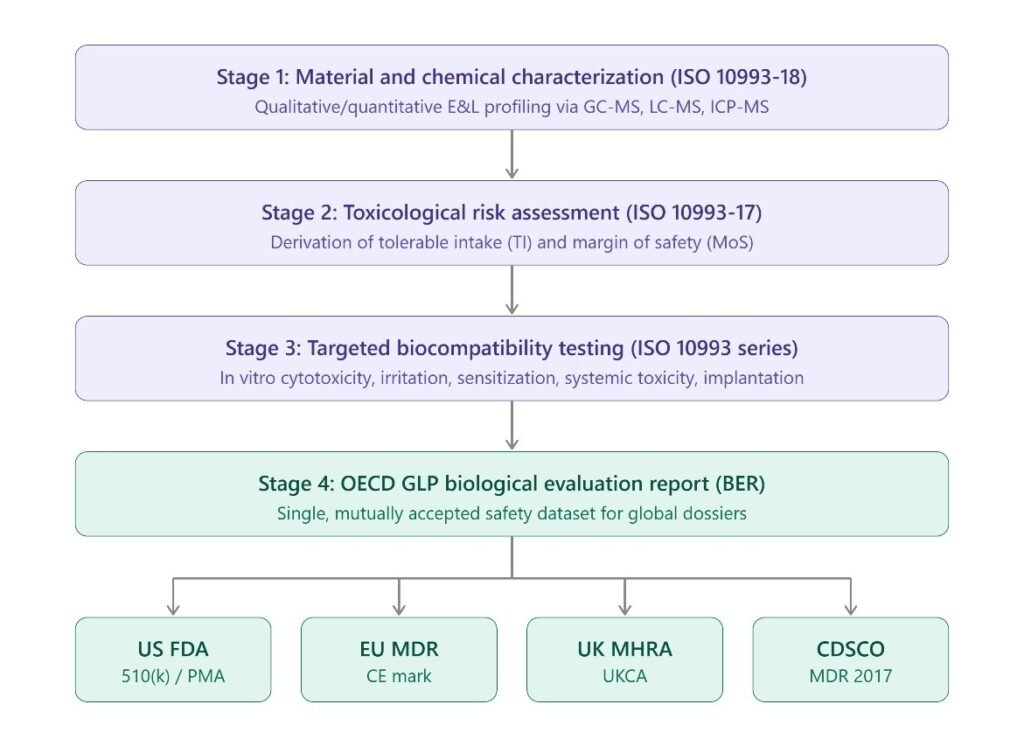
Figure 1: Harmonized ISO 10993 Preclinical Safety Evaluation Pathway for Multi-Market Regulatory Submissions.
Detailed Stages of the Testing Framework:
- Material Characterization & Analytical Chemistry (ISO 10993-18):
- Qualitative and quantitative identification of raw materials, polymers, additives, colorants, manufacturing residuals, and processing aids.
-
- Analytical screening for extractables and leachables (E&L) using high-resolution GC-MS, LC-MS, and ICP-MS under clinically relevant extraction conditions.
- Toxicological Risk Assessment (ISO 10993-17):
-
- Derivation of Tolerable Intake (TI) and Tolerable Contact Limit (TCL) values for identified chemical constituents.
-
- Margin of Safety (MoS) determinations that establish toxicological safety margins, often eliminating the need for unnecessary animal testing.
- Core Biocompatibility Endpoints:
-
- Surface Devices: In vitro cytotoxicity (ISO 10993-5), sensitization (ISO 10993-10), irritation/intracutaneous reactivity (ISO 10993-23).
-
- External Communicating & Implanted Devices: Acute, subacute, and subchronic systemic toxicity (ISO 10993-11), local implantation effects (ISO 10993-6), genotoxicity (ISO 10993-3), hemocompatibility (ISO 10993-4), and material-mediated pyrogenicity.
- GLP Quality Compliance:
-
- Ensuring all pivotal in vitro and in vivo studies are conducted in strict adherence to OECD Principles of Good Laboratory Practice (GLP) to guarantee worldwide legal and technical acceptability.
Accelerating Medical Device Market Approvals with IIBAT
Navigating overlapping regulatory standards across the US, EU, UK, and India requires technical precision and defensible safety data.
The International Institute of Biotechnology and Toxicology (IIBAT) provides comprehensive preclinical safety testing and regulatory science solutions from an OECD GLP-certified testing facility. With advanced analytical laboratories and toxicological expertise, IIBAT supports medical device developers and manufacturers at every stage of the product lifecycle. Connect with IIBAT’s regulatory toxicology and medical device testing specialists to establish your preclinical testing program and advance your global regulatory filings.


Leave a Reply